





Securing Freedom for A Growing Nation
The Northwest Ordinance helped shape America's vision for liberty, education, and human dignity long before the nation expanded westward.
07/13/26
John Stonestreet and Andrew Carico

As America continues to celebrate the 250th anniversary of the Declaration of Independence, today marks an anniversary of a significant step toward fulfilling the âself-evidentâ truths proclaimed in our founding document. The Northwest Ordinance, also known as âAn Ordinance for the Government of the Territory of the United States North-West of the River Ohioâ was signed on July 13, 1787, and is one of four âorganic lawsâ that serve as the foundational laws for the nation. The others include the Declaration of Independence, the Articles of Confederation (Americaâs first Constitution), and the current U.S. Constitution. Â
The Northwest Ordinance was first passed under the Articles of Confederation and stipulated that the settlement and eventual statehood of federal territory beyond the original 13 statesânow the states of Ohio, Indiana, Illinois, Michigan, Wisconsin, and part of Minnesotaâwas to be free territory. Thomas Jefferson, the principal author of the Declaration of Independence, was instrumental in Virginia gifting the land to the Union on the condition it be without slavery. Â
Article 6 of the Northwest Ordinance reads, âThere shall be neither slavery nor involuntary servitude in the said territory.â Itâs extraordinary that the first major law governing the expansion of the United Statesâin the very same year that the U.S. Constitution was writtenâprohibited slavery. The preamble stated that these new territories should extend âthe fundamental principles of civil and religious liberty.â Two years later the law was reaffirmed by the First Congress of the United States under the new Constitution, ensuring that it would remain good, standing law. Â
The Northwest Ordinance does not absolve the nation from the original sin of slavery. In fact, it also contained a provision about returning escaped slaves from the new territories. The Constitution had its own compromises on the practice as well. However, as some scholars have argued, the principles of the country should be distinguished from its compromises. In fact, many of Americaâs most significant social reformers, including Frederick Douglass to Martin Luther King, Jr., have made such a distinction. Â
Because many of our Founders understood the moral evil of slavery, they set a standard for how the country could expand without it. It was a generation after the Founding that the myth of the âpositive goodâ of slavery would emerge, and that the Declarationâs âself-evidentâ truth of equality would be challenged as âa self-evident lie.â But, as Abraham Lincoln would later say, the Founders sought to put slavery on the âcourse to ultimate extinctionâ and ensure that the âabstract truthâ of human equality would be applied âto all peoples of all colors everywhere.â Â
The Northwest Ordinance also significantly shaped the future of education in America. Though the new territory would ensure private ownership by citizens, a section in each new township would be established for public education. Article 3 of the Ordinance stated clearly why: Â
Religion, morality, and knowledge, being necessary to good government and the happiness of mankind, schools and the means of education shall forever be encouraged.Â
Notice the wording. Good government and manâs happiness necessitate that religion, morality, and knowledge be cultivated amongst the citizenry. And education is an essential way to accomplish that. However, as Dr. Larry Arnn, president of Hillsdale College, has rightly observed: Â
We think differently about the purposes of education today, to say the least. Prayer is now banned in public schools. Morality, when it is taught, is conceived as a subjective thing, or yet more commonly as a newly invented thing to be found under the heading âpolitical correctness.â The ideas of âknowledge,â âgood government,â and âhappinessâ are now subjected to the tender care of deconstruction and historicism. Â
America was committed to education because it was first committed to a moral vision of life. That vision is inherent within a Christian worldview, which is built upon the implications of who God is and who He made us to be. The Colson Educators program was built to cultivate that understanding of the purpose of education, which is demanded by a Christian worldview and essential for the next generation to know and to hold. Â
The principles of the Declaration were ambitious and aspirational, and they were not matched by life on the ground. However, it is encouraging to find commitment to those ideals elsewhere, from the heroic actions of Americans to the intentionality of The Northwest Ordinance, in order that they be secured for all people. They still provide a solid basis for an education that advances religion, morality, and knowledge. Â
Share


Have a Follow-up Question?
Up
Next



Related Content
 Another Discovery Affirms the Historicity of the Bible April 6, 2022John Stonestreet and Timothy D Padgett Articles, BreakPoint The Bible doesnât claim to be true in some watered-down âspiritualâ sense. It claims to… …
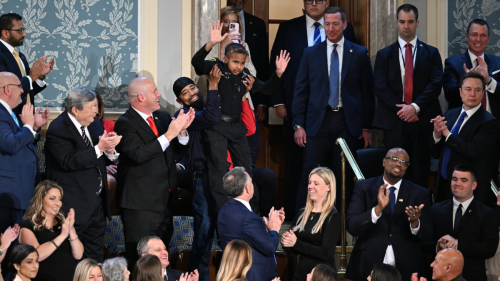 How Christianity Changed the Way the World Sees Disability, What Many Miss about Happiness, and New Study on Trans Surgery March 7, 2025John Stonestreet and Maria Baer Articles, BP This Week John and Maria discuss DJ Daniel, Disability Awareness Month, and Christian history. …
 A Moment for Renewing Education and the Consequences of Over-Diagnosing Prenatal Conditions February 28, 2025John Stonestreet and Maria Baer Articles, BP This Week Big changes are being proposed to how we do education in America. …
Your gift will have DOUBLE the impact on pastors like Ryan!
"I wanted to.... teach my congregation to live in the world faithfully and not just share a gospel presentation. It's about being able to tell a story about what God's doing in the world."


© Copyright 2020, All Rights Reserved.




Learn
Connect

Programs
Store
Sign up for the Daily Commentary