





Beyond Crispr: Recreating Man with Genetic Editing
The âman-moulders of the new ageâ vs. Imago Dei.Â
07/14/26
John Stonestreet and Andrew Carico

Recently, the New York Times reported that scientists at Columbia University have used a new technology called âbase editingâ to alter the DNA of early human embryos with unprecedented accuracy. Â
As the Times noted, Â
On the one hand, the technology might one day enable parents to safely repair disease-causing mutations in embryos. But it might also be used to select desired traitsâa practice that some ethicists have argued is nothing short of eugenics. Â
These recent approaches differ from earlier gene-editing methods like CRISPR, which remove defective genes rather than improve them. So, what the Times has reported is not just a difference in degree, but in kind, though with the same moral questions still unanswered. As Andrew Walker said at WORLD, âWe should recognize that this technology occupies a morally gray zone . . . Therapeutic intervention differs from genetic enhancement . . . Base editing enables both.â Â
Neither base editing nor CRISPR will be the last foray into this kind of eugenics. In fact, some of us predicted that the imprisonment by the CCP of a Chinese scientist who used CRISPR to modify human embryos was more of a distraction than a punishment. If so, it worked. The public has moved on. The outrage at Dr. He has died down. His work continues, even as Columbia researchers add a degree of academic respectability to the efforts to edit human beings.Â
And it always goes like this. As one of the geneticists from Columbia put it, we need a public âdiscussionâ about gene editing. Do we? Before or after we do it? No, these scientists behave as if the moral questions are settled, or at least a matter of personal interest, and all thatâs left is to discuss how best to use this technology. Â
Both history and the Bible warn what happens when our technologies outrun our ethics. Many have now forgotten the U.S. Supreme Court decision in Buck v. Bell (1927). Caught up in the euphoria of the Progressive Eraâs zeal for scientific improvement, Justice Oliver Wendell Holmes spoke for an 8-1 majority and upheld a compulsory sterilization law of the mentally disabled. The aim of the law was, as the Court said, to âprevent those who are manifestly unfit from continuing their kind.â According to Holmes, in the case of Carrie Buck being sterilized, âthree generations of imbeciles are enough.â Lawyers representing the Nazis at the Nuremberg trials after World War II cited Holmesâ opinion in Buck v. Bell to justify their own eugenics efforts in the Nazi regime. Â
New developments in gene editing are still plagued by essential questions regarding human nature. First, is human nature permanently flawed or are we constantly progressing toward perfection? And, second what will stop us from using this technology not just to repair, but to pursue perfection, orâdare I sayâa master race? Â
These arenât far-fetched questions. One scientist quoted by the Times raised exactly that concern when he said, âIn regular I.V.F., embryos are screened for genetic abnormalities,â but base line editing âis providing the âbaby improversâ with a how-to manual for forays beyond the ethical pale.âÂ
In The Abolition of Man, C.S. Lewis foresaw these dangers:Â
Manâs conquest of Nature, if the dreams of some scientific planners are realized, means the rule of a few hundreds of men over billions upon billions of menâ¦But the man-moulders of the new age will be armed with the power of an omnicompetent state and irresistible scientific technique: we shall get at last a race of conditioners who really can cut out all posterity in what shape they please.Â
Yet, what governs these âconditionersâ? A âpublic discussion?â No. Without moral standards, we are left to the impulses of those in charge.Â
Recently, Christian ethicist Scott Rae argued that those things resulting from the Fall are within the domain of medical treatment (such as disease), while those not resulting from the Fall are the âgivensâ of life and not in the realm of enhancement (such as your biological sex, eye color, etc.). This distinction is helpful, despite the real challenge of drawing such an ethical line in a Fallen world, much less expecting others to comply.Â
Scripture is plain. Every person is made in Godâs image and is endowed with eternal dignity, worth, and beauty. Any potential value to be found in this new base-editing technology will be outweighed by the consequences of not recognizing what is true of the human condition, both our value and our potential for evil. In this case as well, the potential consequences far outweigh the potential benefits.
Share


Have a Follow-up Question?
Up
Next



Related Content
 Another Discovery Affirms the Historicity of the Bible April 6, 2022John Stonestreet and Timothy D Padgett Articles, BreakPoint The Bible doesnât claim to be true in some watered-down âspiritualâ sense. It claims to… …
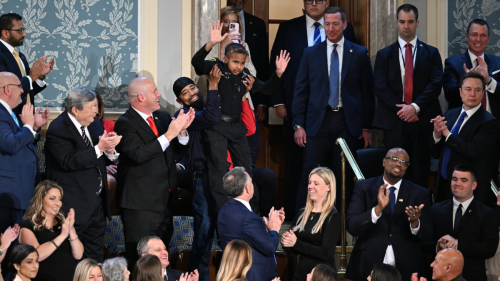 How Christianity Changed the Way the World Sees Disability, What Many Miss about Happiness, and New Study on Trans Surgery March 7, 2025John Stonestreet and Maria Baer Articles, BP This Week John and Maria discuss DJ Daniel, Disability Awareness Month, and Christian history. …
 A Moment for Renewing Education and the Consequences of Over-Diagnosing Prenatal Conditions February 28, 2025John Stonestreet and Maria Baer Articles, BP This Week Big changes are being proposed to how we do education in America. …
Your gift will have DOUBLE the impact on pastors like Ryan!
"I wanted to.... teach my congregation to live in the world faithfully and not just share a gospel presentation. It's about being able to tell a story about what God's doing in the world."


© Copyright 2020, All Rights Reserved.





Learn
Connect

Programs
Store
Sign up for the Daily Commentary